The six-month 1:1 coaching program
The Skill of Long-Term Investing
Six months of intensive personal coaching in which you master the skill of long-term investing, step by step, with an experienced investor and teacher at your side.
- Weekly one-on-one sessions (60 min)
- Weekly assignments and independent study materials
- Thesis defense and exam every two weeks
- Reviews after 3 and after 6 months (90 min)

Why this program
You want to truly understand the financial markets and master the skill of long-term investing. But the information in books, videos, personal opinions and social media is scattered, often contradictory and confusing. It does not lead to a clear strategy or a strong set of skills.
What is missing is not more information. It's a complete, professional program with an experienced coach working one-on-one with you: a seasoned investor and teacher who helps you develop a coherent skill, step by step, and gives you the clear, honest feedback you need to invest with confidence.
What you will learn
In six months, you learn the skill of long-term investing. You develop and defend your own investment theses, and construct a complete portfolio the way professionals do.
You learn how financial markets actually work and what makes prices move. You build a solid foundation in market knowledge, investing philosophy and psychology.
You leave with real, applied experience. In week one you open your own paper portfolio with $100,000 in starting capital: six months of investing, analyzing and portfolio building in your own paper account.
This is for you if
- You have explored the markets, or traded or invested a bit, and now want to turn that experience into a lasting skill
- You want to aim high, and you accept that there are no guarantees
- You can commit 4 to 6 hours a week, for six months
- You are willing to study, practice and receive honest feedback
This is not for you if
- You are looking for signals, picks, or someone to tell you what to buy
- You expect quick or guaranteed returns
- You want a 30-day shortcut. This is a six-month program, and that time is exactly what builds the skill
Entry requirements
Intro call
Every student is accepted after a personal intro call, to make sure the program is the right fit.
Basic market knowledge
You know what a stock is and what the financial markets are.
Tools
A computer with Excel or Google Sheets.
Language
You are comfortable following lessons in English.
The program
The program runs for six months in four phases. Each phase builds on the previous one, taking you from a solid foundation to full independence.
Month 1
Foundation
You define who you are as an investor: your goals, your time horizon and your objectives, and you learn to understand a business completely. By the end, you have your first Investment Policy Statement (IPS) and your paper portfolio is up and running.
Months 2–3
Understanding businesses and value
You learn how a business shows up in the numbers, compare price with value, judge quality with a full annual report analysis and map an industry and its moats. Your first positions open, each with a one-page thesis.
Months 4–5
Valuation and the thesis
You build your own DCF and reverse DCF model, learn to read the consensus, judge management and capital allocation, and write a five-page investment memo. Every position now has a valuation model and a margin of safety.
Month 6
Behavior and independence
You study risk, market psychology and your own behavior, audit your decision journal and defend your 20-year plan. By the end, you have finished your IPS and investment plan, and you manage your paper portfolio entirely on your own.
Show the six months, week by week
| Weeks | Module | Thesis defense or review | Paper portfolio |
|---|---|---|---|
| 1–2 | 1. The shareholder's mindset | Investor profile and your Investment Policy Statement (IPS v1) | You open your paper portfolio with $100,000 in starting capital, set up with index funds and ballast |
| 3–4 | 2. Understanding the business completely | One-page business model map, the foundation of your circle of competence | Your benchmark position is in place and every decision is logged |
| 5–6 | 3. How the business shows up in the numbers | Business case: where did the money go? | The watchlist grows, every decision journaled |
| 7–8 | 4. Price vs value, relative valuation and margin of safety | Valuation modeling: cheap or broken? | First positions open, each with a written one-page thesis |
| 9–10 | 5. Judging quality | Full annual report analysis and your IPS v2 | Every candidate must earn its place in writing |
| 11–12 | 6. The industry: competition, moats and market dynamics | Industry map and moat verdict | New positions defended in a thesis defense |
| 12/13 | Review after 3 months | Quality of reasoning, first positions, behavioral gap and goals for the next three months | |
| 13–14 | 7. Intrinsic valuation (incl. cost of capital) | Discounted cash flow model (DCF), reverse DCF and your IPS v3 | Every position now carries your own valuation model and a margin of safety |
| 15–16 | 8. Reading the consensus | Consensus read, defended | |
| 17–18 | 9. Management and capital allocation | Management scorecard: promises vs. delivered | Position sizing applied |
| 19–20 | 10. The thesis | Five-page investment memo with price, size and margin of safety | Process graded separately from outcome |
| 21–22 | 11. Risk, behavior and measurement | Emotion map and decision-journal audit | You manage the portfolio. The coach gives feedback, the decisions are yours |
| 23–24 | 12. The real deal | The 20-year plan, defended, and your final IPS | |
| 25 | Final week: capstone and review after 6 months | Final investment plan, final IPS and your plan for continued growth | Independence: six months of documented decisions. The benchmark comparison is shown, but the process record is what counts |
How the program works
- Weekly 1:1 session (60 min)We discuss the core chapter of the week, review last week's assignment, share the self-study material, track your paper portfolio, analyze companies on your watchlist and prepare the next assignment. Fully tailored to your progress.
- Weekly independent studyA book chapter, an academic paper or memo, or a video. Additional material is available if you want to go deeper.
- Weekly practical assignmentTo apply what you learned right away.
- Exam every two weeksA questionnaire, analysis or case study that closes each topic. If you don't pass, you get detailed 1:1 feedback and a second attempt.
- Thesis defense every two weeksYou defend the assignment of each topic, such as part of your IPS, a valuation model or a portfolio update. You pass when your reasoning holds up under scrutiny. If not, you get feedback and a second attempt.
- Reviews after 3 and after 6 months (90 min)After 3 and after 6 months we review your progress, research process and decision journal.
- Built-in flexibilityA one-week break and two personal flex weeks for holidays, illness, catching up or a retake.
What you finish with
You leave with a complete, personal investing system, usable for the rest of your life.
- Your Investment Policy Statement (IPS)Your personal rulebook: goals, required return, allocation, position limits, holding policy and crisis protocol, rewritten as your skills grow.
- Your Investment PlanHow the rules get applied: your long-term plan, a crash playbook, and written sell rules for every holding.
- Your Spreadsheet ToolkitA personal dashboard, a discounted cash flow (DCF) model, sensitivity analysis, and simulators for position sizing, rebalancing and retirement.
- Your Investment MemosThe written arguments behind your key decisions, from one-page theses to a five-page memo and a letter to your future self.
- Six Months of Real PracticeYour paper portfolio and decision journal: six months of documented decisions, two reviews, and lessons you can point to.
What you are assessed on
Great investors are built on great decisions, not short-term outcomes. That's why we measure what you control and what leads to results over the long term: your process, reasoning and discipline. Your exams, thesis defenses and paper portfolio decisions show exactly where you stand and what to work on next.
Your coach
More about Lenny →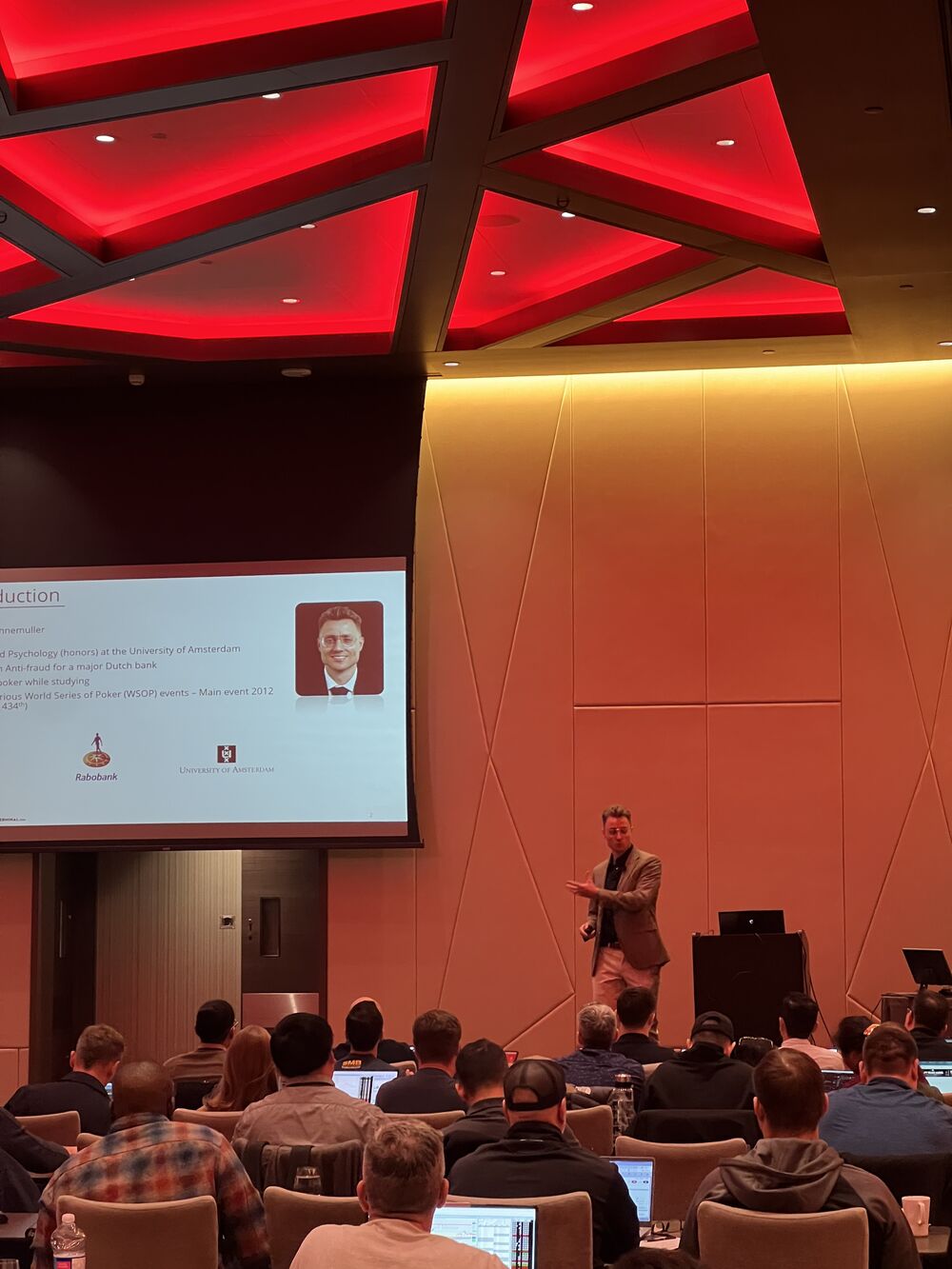
Lenny Winnemuller
I started my career as a professional trader at an Amsterdam-based proprietary trading firm. After strong results in the Peak Capital Trading bootcamp, I earned a seat at Andrew Aziz's firm, Peak Capital Trading.
Today I invest independently for the long term and teach long-term investing in a Canadian trader education program. Years of working in the markets taught me what really makes the difference: not the next big idea, but discipline, a clear process and control over your own behaviour.
Frequently asked questions
Do you guarantee returns?
No. The evidence says most who chase outperformance fail, and I will show you that evidence in the first month. What I commit to is the training: high-quality education, honest feedback, and 1:1 guidance in skill development. In the end, however, the market owes nobody a thing.
Will I actually beat the market after this?
Maybe not, but by the end of the program you will know whether to try, and how. The skills transfer either way: understanding businesses, valuing them, managing risk and managing your own psychology pay off in your career, your business, and every financial decision you make after this program.
Is this investment advice?
No. This is an education and coaching program. I teach you how to build and follow your own investing process. I never give buy, sell or hold recommendations, and all exercises take place in a paper portfolio.
What if I fall behind?
Two flex weeks exist precisely for that. The program extends; it does not skip. Sequence matters more than speed.
Why six months?
Because understanding businesses and markets, building a valuation and surviving a defense are skills, and skills take practice. Six focused months with weekly 1:1 sessions give you the full process, and enough real decisions for the psychological layer to show itself.
What if I start and realize it's not for me?
You can withdraw within the first 10 days and receive 100% of your payment back.
Is the coaching online?
Yes. All sessions take place online, so you can join from anywhere.
How much does it cost?
We discuss the investment and the payment options in your intro call.
Limited availability
Ready to build the skill of long-term investing?
Because every student receives intensive 1:1 coaching, I only work with a small number of students at a time. It starts with a free, personal intro call: where you are now, what you want to achieve, and whether this program is the right fit. An honest conversation. The next group starts in January. Applications close on 14 December.